 The ADQI renal authority turns its attention to fluid strategy in ADQI III’s BJA article.
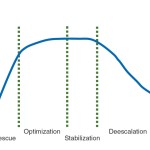
Choose the right fluid balance target for the stage of critical illness:
- Rescue – first few minutes; generous fluid boluses to treat shock. Obviously, not all patients require this phase.
- Optimization – few hours; assessment of tissue perfusion, use of fluid responsiveness markers, working towards stability
- Stabilization – next few days; cover losses but otherwise minimize fluids and keep balance neutral-ish.
- De-escalation – mobilize fluid; allow or encourage it out; negative balance.
Different measurements and vital signs are valid (or used) at different stages. The utility of ScvO2, cardiac output monitoring, echo and fluid responsiveness markers for assessing volume status are largely confined to the ‘optimization’ period.
Lack of attention in the optimization and stabilization stage is common. Fluid in drugs and electrolyte replacement adds up and often passes relatively unchecked.
In addition a current article in Crit Care involved 492 patients in a prospective registry-collected observational study. Multivariate LR was used to assess whether fluid balance and hypotension (on RRT) was related to death or prolonged renal support. Positive fluid balance, or hypotension, in the first seven days of renal support was associated with greater mortality, but not long term renal support.
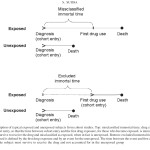
It’s difficult to draw any firm conclusions from this observational study. Although many variables were adjusted for, some can never be. Immortal time bias is a particular potential problem in this instance. However it as least adds more weight to ADQI’s assertions.
More on ‘shaping’ fluid balance on the OXICM site.

 Wessex ICS BottomLine
Know your phases and master fluid management
November 22, 2014
Choose the right fluid balance target for the stage of critical illness:
Different measurements and vital signs are valid (or used) at different stages. The utility of ScvO2, cardiac output monitoring, echo and fluid responsiveness markers for assessing volume status are largely confined to the ‘optimization’ period.
Lack of attention in the optimization and stabilization stage is common. Fluid in drugs and electrolyte replacement adds up and often passes relatively unchecked.
In addition a current article in Crit Care involved 492 patients in a prospective registry-collected observational study. Multivariate LR was used to assess whether fluid balance and hypotension (on RRT) was related to death or prolonged renal support. Positive fluid balance, or hypotension, in the first seven days of renal support was associated with greater mortality, but not long term renal support.
It’s difficult to draw any firm conclusions from this observational study. Although many variables were adjusted for, some can never be. Immortal time bias is a particular potential problem in this instance. However it as least adds more weight to ADQI’s assertions.
More on ‘shaping’ fluid balance on the OXICM site.